
Most popular routes concentrate 80% of travelers on less than 20% of global destinations. Yet, entire regions remain largely ignored despite their accessibility and hospitality potential. Some local regulations or community initiatives are transforming the travel experience today, encouraging responsible exploration off the beaten path.
Alternatives are emerging, driven by local networks and specialized platforms. These options meet a growing demand for personalized stays, away from the usual flows, while valuing authenticity and connection.
Why traveling differently is increasingly appealing to globetrotters
Mass tourism imposes its codes, its marked circuits, its compact crowds. Faced with this saturation, many travelers are taking the opposite approach and seeking a way to escape mass tourism. The goal? To rediscover the flavor of authentic discovery, immerse oneself in local ways of life, and respect the territories traversed. Traveling off the beaten path is no longer just a marketing posture: it has become a condition to preserve the experience, and sometimes, the places themselves.
This new momentum translates into concrete practices. Backpacking, whose origins date back to Gemelli Careri and which gained popularity on the Hippie Trail, appeals for its independence and simplicity. Couchsurfing, initiated by Casey Fenton, places hospitality and connection at the heart of the adventure. WWOOF, founded by Sue Coppard, offers stays on organic farms in exchange for a few hours of work, thus fostering genuine ties with local communities. Some prefer apartment rentals or exchanges to anchor themselves, even temporarily, in neighborhood life, far from the uniformity of hotel zones.
Choosing to travel differently means rejecting the standardization of itineraries, prioritizing exchange, slowness, and commitment. Platforms like https://www.seekandtravel.net/ pave the way for different stay models, inviting a rethinking of travel as a meaningful act, filled with experiences and real encounters. At stake is a dynamic mapping, far from the highways of industrial tourism.
Which lesser-known destinations truly deserve a detour?
Exploring destinations for alternative travel means going where the crowd does not. Forget the must-sees from brochures: richness often awaits in the interstices, where cultural diversity is preserved and nature remains intact.
In Sumatra, for example, the dense jungle replaces the crowded beaches of Bali. Observing orangutans in the Gunung Leuser reserve around Ketambe, traversing the Harau valley, getting lost on the beaches of Pulau Weh, or contemplating the tranquility of Lake Toba, home to the Batak, is what these lands ignored by the crowds offer. Classic guides often overlook these raw and unforgettable experiences.
In the Mediterranean, Sardinia defies clichés. Here, colorful villages like Bosa, the wild coves of Cala Luna, or the ghostly ruins of Gairo Vecchio tell the story of an authentic island, far from the crowds of the French Riviera. The landscapes of Costa Smeralda, the cliffs of Ulassai, or the crystal-clear waters of Cala Gonone paint the portrait of a unique destination.
Latin America, too often summarized by its headliners, also holds treasures. Colombia presents itself as a vibrant alternative to Costa Rica: Medellín and its energy, Mompox and its history, the preserved nature of Tayrona Park, the coffee plantations of Salento, the mysterious memory of Ciudad Perdida. Nicaragua offers the colonial charm of Granada, the volcanoes of Ometepe, or the wild reserve of Indio Maíz, far from tourist hustle.
Europe is no exception. Montenegro rivals Croatia in authenticity, which has become a victim of its success. The Bay of Kotor, Perast, the Ostrog Monastery, and Lovćen National Park are preserved jewels, marked by unique hospitality. Further north, Norway offers natural wonders: Lofoten Islands, spectacular fjords of Geiranger and Nærøy, villages of Reine or Borgund. Here, the change of scenery invites itself on every road.
To travel differently, dare to explore these preserved territories, ready to reveal their secrets to those who know how to look beyond marked circuits.
Practical tips for exploring preserved places and enriching your experience
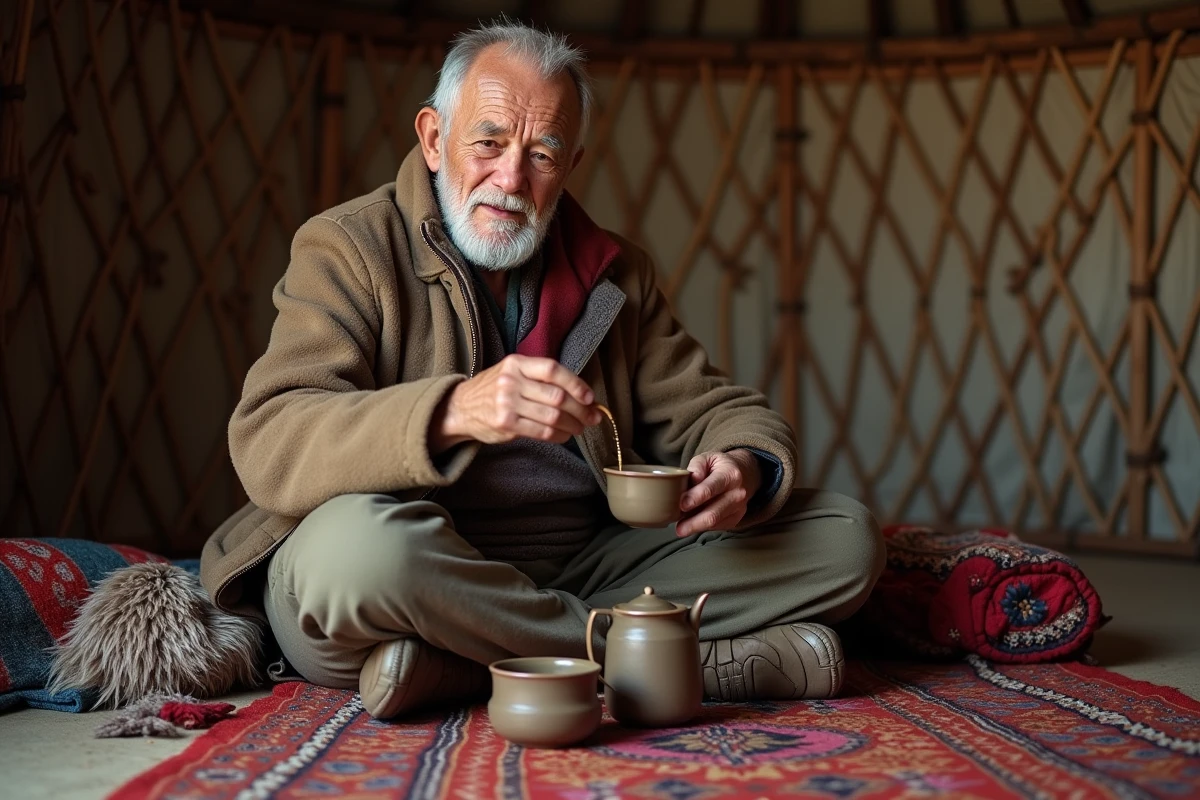
Venturing onto forgotten paths requires a new approach to travel. It’s about slowing down: taking your time, using local transport, stopping at markets, chatting with locals. Moving away from pre-packaged comfort, choosing to stay with locals, exchange your apartment, or opt for backpacking, a legacy of the Hippie Trail and Gemelli Careri, gives each step the flavor of the unexpected.
Immersion is at the heart of these alternative travels. Thanks to couchsurfing, conceived by Casey Fenton, you share the daily lives of families from here and elsewhere. The WWOOF network, created by Sue Coppard, invites you to participate in the life of organic farms, all in the spirit of mutual aid and exchange. These experiences are part of a logic of meeting and learning about local ways of life.
Here are some concrete recommendations to enrich your adventure:
- Be mindful of the impact of your presence on the local population and environment.
- Consult local associations, prioritize independent guides, support short circuits.
- Prepare each step without locking everything in: leave room for the unexpected, accept invitations, open yourself to spontaneous exchanges.
Curiosity and respect guide this way of traveling. Distancing oneself from mass tourism, seeking preserved places, adopting a sharing ethic: all these choices transform travel into a living experience, nourished by authenticity and unexpected encounters. The road belongs to those who dare to reinvent it, step by step.