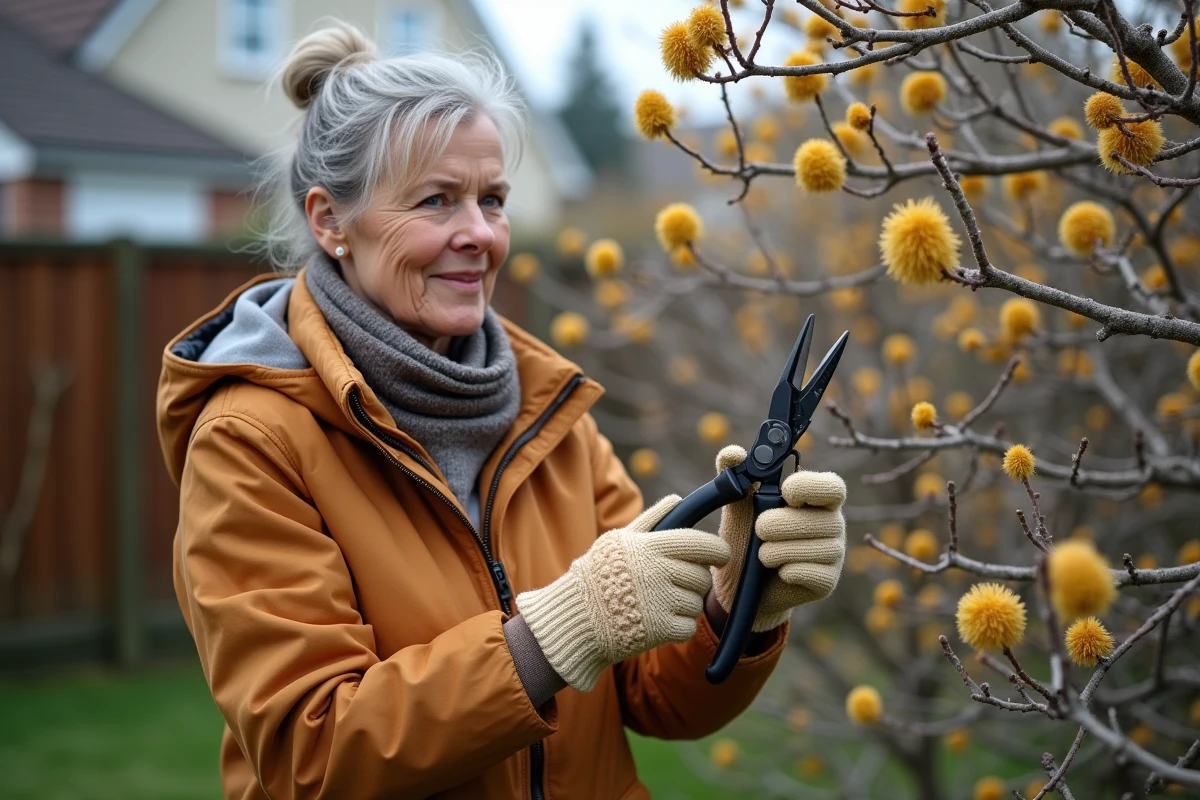
Mimosa seedlings struggle with negative temperatures, but some varieties manage to survive moderate frosts, provided they are pruned correctly at the right time. Despite the widespread belief that any black or burned part should be cut immediately, premature pruning can compromise the plant’s recovery.
Waiting for the sap to rise and observing the actual regrowth before any major intervention helps avoid irreversible mistakes. Experts’ opinions differ on the ideal pruning window, but they all agree on the necessity of accurately identifying the living branches before taking action.
Recognizing a frost-damaged mimosa: signs, risks, and first reflexes
A mimosa facing frost is first and foremost a tree that shows the impact. Dropping foliage, darkened hue, branches that seem frozen in winter. The signs are unmistakable: blackened or shriveled leaves, a dried-out appearance, especially in the most sensitive subjects like Acacia dealbata. The contrast intensifies between the browned young shoots and the base of the tree, which may still be firm beneath the bark.
The trunk also tells the story of thermal shock. A sagging, cracked, or spongy bark alerts to the severity of the damage. However, if the base at ground level remains hard to the touch, all is not lost. What looms then is not only the death of tissues: it is also diseases that take advantage of the weakness to settle in.
In these moments, resisting the urge to cut everything proves beneficial. It is better to wait: as soon as the frosts recede, one can assess the actual extent of the damage. Until then, watering should be reduced to a strict minimum, soil moisture should be monitored, and light mulching to protect the stump are the actions that give the best chance for recovery.
For those wishing to prune a frozen mimosa after the frost, the method is simple but requires precision. Inspect each branch, gently scratch the bark with a nail: if green appears, life is still flowing. Cut just above, always with well-disinfected tools. This carefully executed intervention can make the difference between a mimosa that recovers and a tree that will not bounce back.
How to intervene after frost? Essential actions for pruning and restarting growth
Pruning a mimosa after frost means acting methodically, without haste. Each cut aims to give momentum to the still-living parts, to refocus the tree’s energy. Proceed branch by branch, removing each blackened, soft, or dry stem. Leaving these weakened parts is to open the door to diseases and hinder the recovery of young shoots.
The action must be clean: the cut is always made above a healthy bud or where the wood remains green. If the subject is large, it is not uncommon to have to drastically shorten the main branches, sometimes to 30 or 40 cm from the trunk, in order to concentrate vigor on what can still regrow. For a potted mimosa, it may be wise to reduce the canopy by half to balance the aerial part and the root system, which is limited by the container.
Key points for optimal recovery:
Here are the main actions to adopt to support the mimosa in its recovery:
- Avoid excessive watering: overly wet soil slows healing and promotes rot.
- Maintain light mulching: it limits evaporation while allowing the collar to breathe.
- Watch for the appearance of new shoots to assess regained vitality.
For varieties like Acacia dealbata or Acacia retinodes, a quick and thoughtful pruning encourages the formation of new buds, a prelude to the next flowering. Even a heavily stressed mimosa can surprise with its ability to bounce back, provided the cut has been adjusted with discernment and consistency.
What experts say: tips and mistakes to avoid for a healthy mimosa
Mastering the actions for renewed flowering
Reviving a mimosa after frost is not improvised. Specialists remind us that soil drainage makes all the difference: excess moisture, especially after winter, can jeopardize the health of the root system. Varieties like Acacia dealbata or Acacia retinodes prefer light, enriched soil that does not retain water for too long.
In the south of France or on the Côte d’Azur, the mimosa finds ideal conditions, but just one excessive watering is enough to jeopardize recovery. Professionals recommend allowing the soil to dry between waterings, especially for potted subjects. Preferring a terracotta container offers the roots optimal aeration, far from any confinement.
To maximize chances, it is advisable to apply these tips:
- Eliminate dead branches as soon as winter ends.
- Watch for the emergence of new shoots: they signal the plant’s regained vigor.
- Avoid renewing severe pruning too frequently, at the risk of exhausting the mimosa.
Another appreciated tip: at the first signs of pest attacks, particularly on the finely cut foliage of spring shrubs, a treatment with black soap limits damage while respecting the plant. Ultimately, success comes from attention to drainage, respect for the mimosa’s natural rhythm, and regular observation, without relent. Vigilance and perseverance pay off, season after season, to see this spectacular acacia bloom again at the first improvement.