Maintaining a swimming pool is essential to ensure a pleasant and healthy swimming experience. Chlorine treatment remains a popular method due to its effectiveness in eliminating bacteria and impurities. Clean and safe pool water requires special attention to the chlorine concentration, which must be maintained within an ideal range to avoid irritation and preserve the health of swimmers. Regular monitoring of pH and effective filtration are crucial to complement the action of chlorine and ensure crystal clear water.
The Fundamentals of Chlorine Treatment for Crystal Clear Pool Water
Chlorine, the preferred disinfectant product, ranks first among solutions for maintaining pool water quality. Its action is multifaceted: it eliminates bacteria, viruses, algae, and fungi, thus ensuring the water’s safety. The use of chlorine is not without consequences. If improperly dosed, it can cause skin and eye irritation, not to mention the risk of damaging pool equipment.
Free chlorine, active and available for disinfection, must be distinguished from combined chlorine, or chloramine, which results from the reaction of chlorine with organic matter present in the water. It is the latter that is often responsible for unpleasant odors and irritations. The goal is therefore to maintain an optimal level of free chlorine for crystal clear pool water.
In some cases, particularly when the water turns green or cloudy, a shock chlorine treatment is necessary to restore water clarity. This procedure involves applying a high dose of chlorine to quickly restore the water’s sanitary balance. The question often arises: How long does chlorine evaporate in a pool? The answer varies depending on the water temperature, sun exposure, and whether or not a stabilizer is present.
Maintaining an adequate chlorine level is inextricably linked to measuring pH. A balanced pH optimizes chlorine efficiency, thus avoiding excessive consumption and premature degradation of the disinfectant product. The balance is delicate but essential, as an imbalance can reduce chlorine effectiveness, leading to the need for additional dosing and, on one hand, increased costs, and on the other hand, a heightened risk to user health and the longevity of the equipment.
Strategies and Best Practices for Maintaining a Healthy Pool with Chlorine
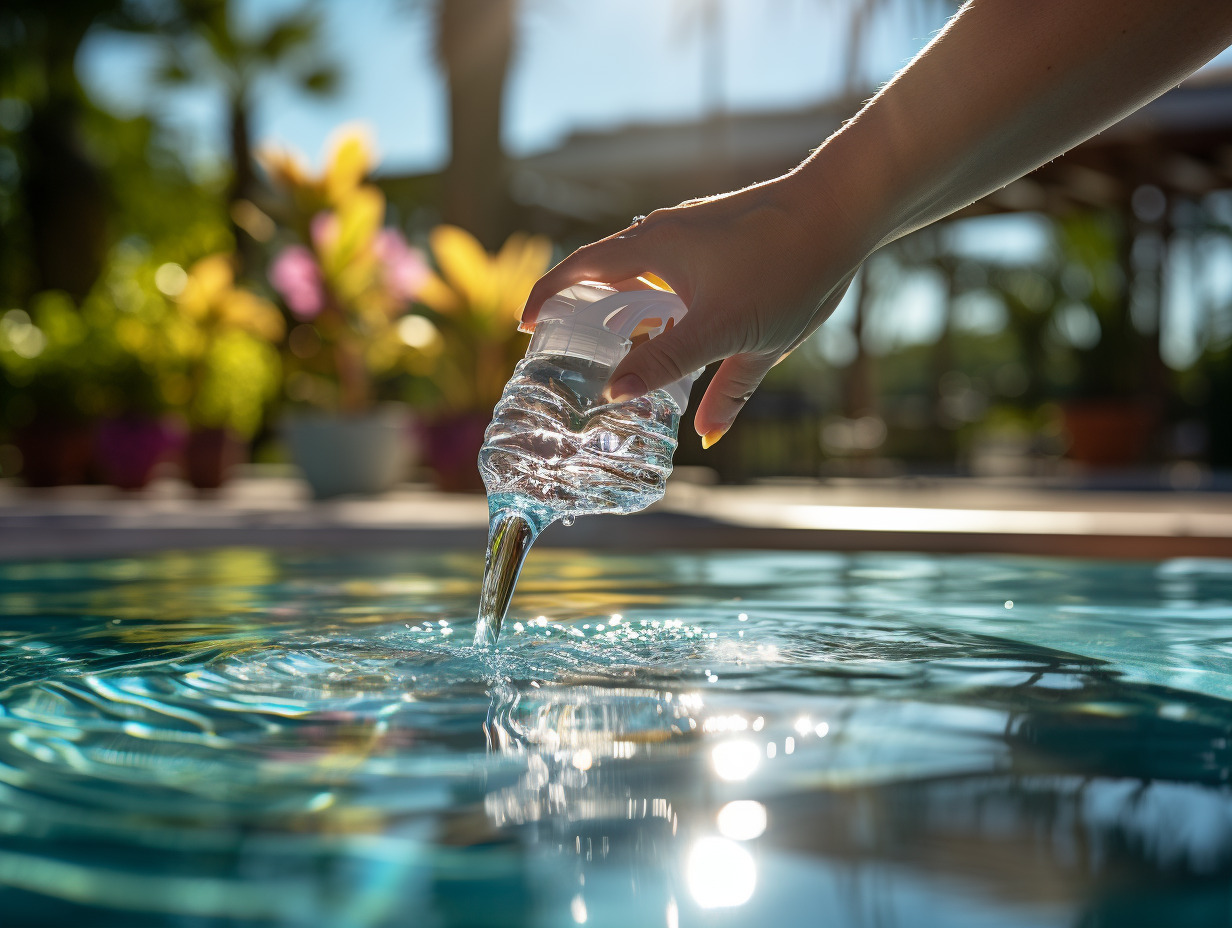
The chlorine level in your pool is the cornerstone of healthy, contaminant-free water. For maximum effectiveness, the chlorine level should be maintained between 1.5 and 2 mg/l. This control, far from being trivial, requires regular and precise monitoring, as even a slight deviation can affect user health and the integrity of the pool itself.
The relationship between pH and chlorine is another critical aspect of maintaining your pool. A balanced pH, generally recommended between 7.2 and 7.6, maximizes chlorine efficiency. Test the water regularly and adjust the pH if necessary, to allow chlorine to fully deploy its disinfecting power without waste or collateral damage.
Regarding chlorine stabilizer, often cyanuric acid, its role is to protect chlorine from degradation by UV rays. However, over-stabilized water can limit chlorine activity. It is important to find the right balance between stabilized chlorine, which already contains a stabilizer, and unstabilized chlorine, for which you will need to adjust the stabilizer separately.
Filtration plays a key role in distributing chlorine throughout the water. An efficient pool pump and good filtration practices contribute to an even distribution of the disinfectant. Don’t forget about winterizing the pool, a period when treatment must be adjusted to preserve water quality until the return of warm weather. Follow these tips to maintain clean and safe pool water, and dive into a hassle-free swimming season.