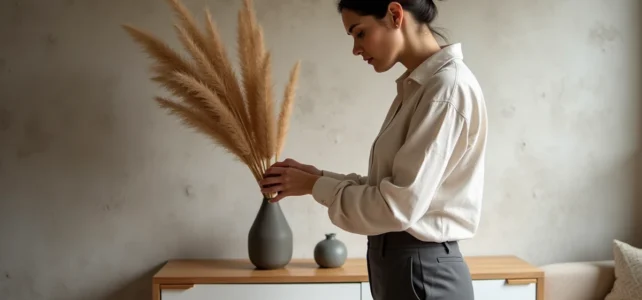
Transforming an interior is not just about changing the color on the walls or replacing a sofa. The real lever, which most decoration articles overlook, lies in how a space responds to the actual needs of its occupants. Modular furniture, bio-sourced materials, vintage finds: technical choices weigh as heavily as aesthetics on the final result.
Transformable furniture and hybrid living layout
A single space that serves as an office in the morning, a gym at noon, and a living room in the evening is no longer a compromise. It has become a design standard, documented by several European real estate observatories under the term hybrid living.
To achieve this, transformable furniture is the first area to consider. Wall-mounted foldable tables, convertible sofas with rapido mechanisms, and drop-leaf desks integrated into a closet: each piece of furniture must serve at least two functions without sacrificing comfort.
Movable partitions (sliding wooden panels, rail-mounted glass walls, thick acoustic curtains) allow for reconfiguring a room without heavy renovations. We recommend opting for recessed tracks in the ceiling rather than freestanding systems, which take up floor space and shift with use. A catalog of solutions suited to different styles can be viewed at ambiance-et-deco.fr, which helps visualize possible combinations before investing.
Mobile storage on wheels (stackable cubes, serving carts, low bookshelves) complements the setup. They can be moved from one area to another depending on the time of day and can disappear into a corner when not in use.
Bio-sourced materials and regenerative interiors
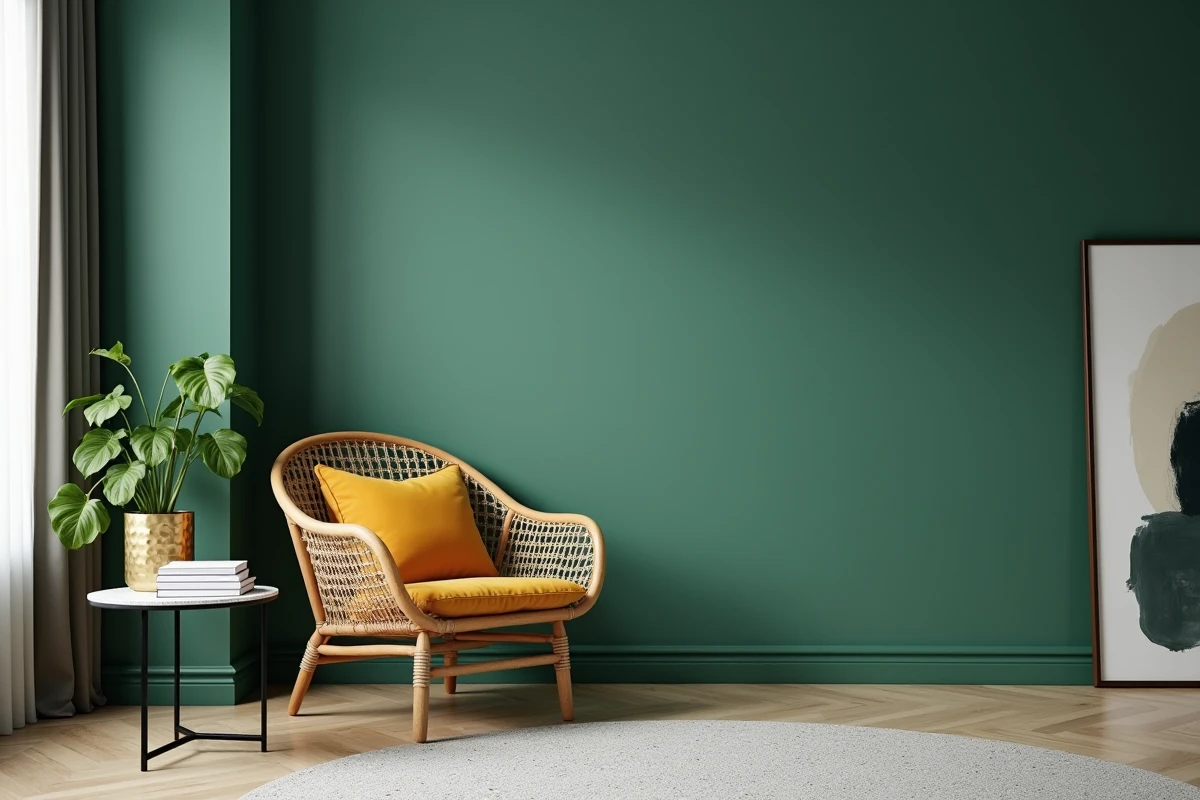
A regenerative interior impacts well-being as much as aesthetics. The demand for spaces that optimize natural light, reduce noise, and use healthy materials has significantly increased in recent years, driven by remote work and mental health concerns.
In concrete terms, this translates into specific material choices:
- Natural lime or clay plasters, which naturally regulate humidity and absorb some volatile organic compounds, unlike standard acrylic paints
- Bio-sourced insulation (wood fiber, hemp, expanded cork) used for acoustic correction on party walls or office partitions, where a simple glass wool panel is insufficient
- Untreated linen or cotton textiles for curtains and covers, which age without releasing microplastic particles into the indoor air
Optimizing natural light relies less on adding windows (often impossible in apartments) and more on choosing reflective surfaces. A light polished concrete floor or bleached wood flooring reflects light to the back of the room. Combined with mirrors positioned opposite openings, this principle transforms a dark living room without touching the structural work.
Second-hand and upcycling as style markers
Second-hand in interior decoration has surpassed the stage of smart buying for budget reasons. Upcycling has become a true marker of personalization, documented by trend reports from platforms like Selency and Le Bon Coin.
Vintage furniture (1960s buffets, patinated leather club chairs, solid oak farm tables) brings a uniqueness that no new industrial piece can replicate. Each item has a story, with signs of wear that create character.
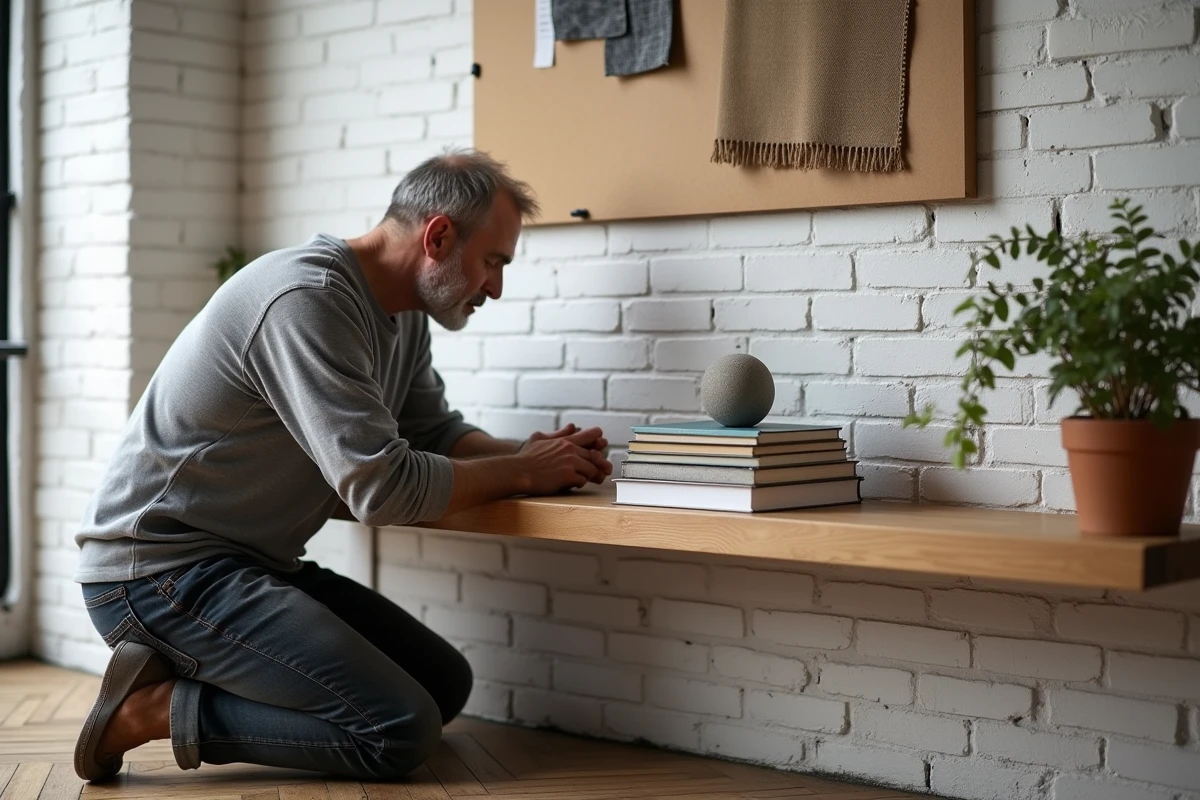
Upcycling goes further. Transforming an old door into a tabletop, converting raw wood crates into wall shelves, reupholstering a chair with designer fabric: these interventions require minimal technique but yield unique results.
Common mistakes in decorative upcycling
Accumulating too many mismatched pieces without a common thread creates an overloaded flea market effect. Limiting the material palette to two or three families (raw wood, black metal, off-white textile, for example) is enough to unify the whole.
Another pitfall: neglecting finishes. A restored piece with an unsuitable varnish yellows in a few months. We often observe poorly applied hard oils that leave visible brush marks. A test on a discreet area before treating the entire surface avoids this kind of disappointment.
Colors and textures: associations that transform a room
The choice of colors remains the quickest lever to change the perception of a space. Two technical principles deserve to be mastered rather than following seasonal trends.
The first: value contrast matters more than hue. A dark terracotta wall paired with light furniture creates a depth that two pastel tones side by side will never produce. The difference in brightness between surfaces visually structures the room, even if small.
The second: layering textures compensates for a lack of color. An entirely white living room becomes rich when paired with a boucle wool throw, a jute rug, corduroy cushions, and a raw wood piece. It is the materials that bring visual complexity, not the multiplication of hues.
- Walls: favor a single strong color per room, on one wall or in an alcove, with the rest remaining neutral
- Floor: the contrast with the walls should be stark; a dark floor under light walls visually enlarges, while the opposite lowers the perceived ceiling
- Textiles: vary the textures (crumpled linen, embossed cotton, felted wool) rather than printed patterns, which quickly go out of style
The transformation of an interior rarely hinges on a single spectacular gesture. It is the articulation between functional choices (modular furniture, layouts adapted to uses), healthy materials, and mastered texture associations that produces a result that is both original and sustainable. Vintage finds, careful finishes, and well-utilized natural lighting do the rest.