
Marcy, a subsidiary of Impex Fitness, distributes a focused range of rowing machines for the home market in Europe. In recent years, the European catalog of the brand has undergone a significant realignment: air and hydraulic piston systems have been gradually phased out in favor of magnetic resistance. This technical shift, rarely commented on in general comparisons, redefines the criteria for choosing between different models.
The official classification of these devices also deserves to be stated upfront. The Marcy rowing machines recently marketed in Europe fall under the EN ISO 20957-1:2013+A1:2015 standard, with a class H (Home) usage rating, meaning strictly for home use. Speaking of intensive or semi-professional use regarding these machines, as some sites do, does not correspond to their actual certification.
Magnetic resistance on Marcy rowing machines: what the technical shift changes
The transition to all-magnetic in the European catalog is not insignificant. A rowing machine with magnetic resistance operates through permanent magnets that slow down the flywheel without mechanical contact. The movement is silent, maintenance is almost non-existent, and mechanical wear is greatly reduced compared to a hydraulic piston system.
For those training at home, in an apartment or near a living space, this is a concrete advantage. Older piston models generated clacking noises on the return stroke, and their smoothness deteriorated after a few months of regular use.
However, magnetic resistance has a limit: it does not replicate the progressive load increase of an air rowing machine, where the harder you pull, the more resistance increases. On a magnetic Marcy, resistance is adjusted in fixed increments. Advanced users looking for a sensation close to real rowing may find this braking a bit linear.
For cardio and fitness-oriented use, in sessions lasting twenty to forty minutes, magnetic remains the most suitable compromise for home use.
To learn everything about the Marcy rowing machine and the specifics of each model, it is necessary to look beyond the consumer product sheets, which often smooth out the differences between models.
Maximum user weight: discrepancies between retailer sheets and manufacturer data
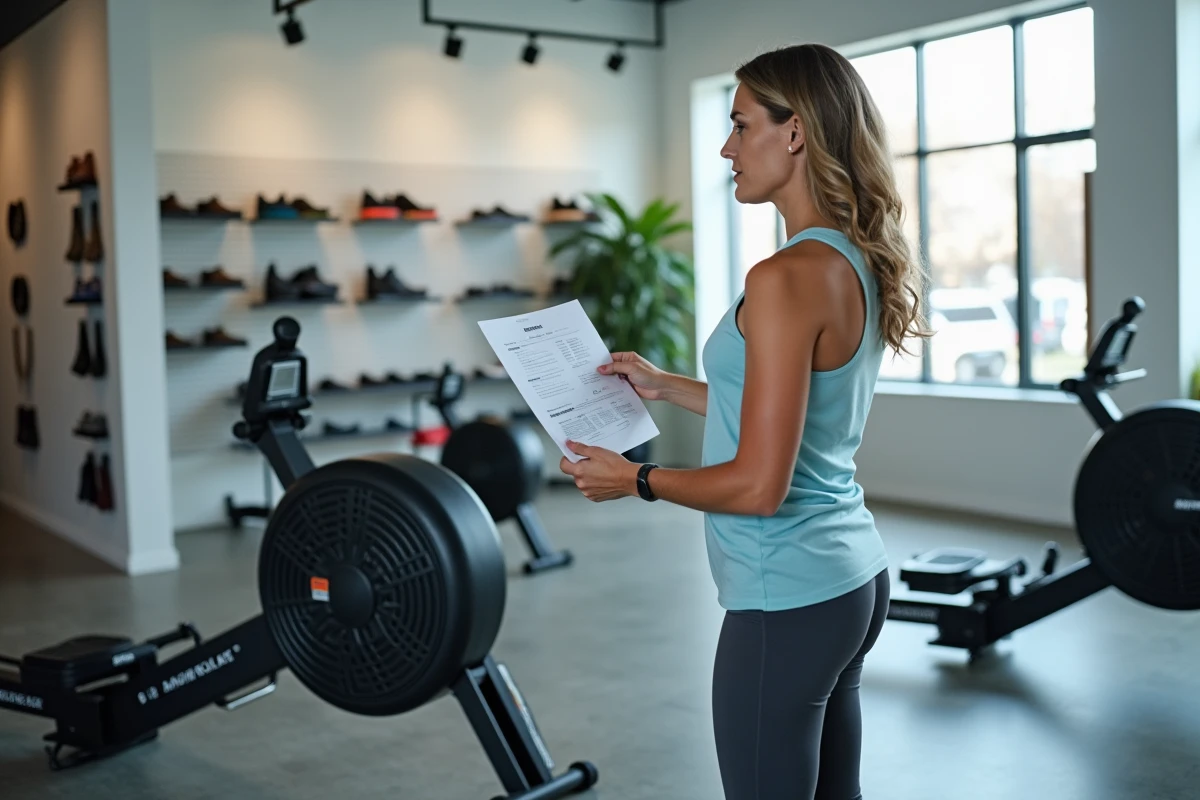
A point rarely raised in comparisons concerns the maximum user weight announced. For entry-level models like the Marcy RM413, the official UK site of Impex Fitness now indicates a capacity of 110 kg. French retailers, however, still frequently display 130 kg or more for the same device.
This discrepancy reflects a downward revision made by the manufacturer, likely related to stricter internal testing. Before purchasing, checking the technical sheet directly on the Impex Fitness site helps avoid an unpleasant surprise. A user weighing 120 kg who relies on a French marketplace sheet risks overloading the device beyond what the manufacturer actually guarantees.
This situation illustrates a broader problem: product data circulates among retailers without being systematically updated when the manufacturer revises its specifications. Field feedback varies on this point, with some users over 110 kg reporting no mechanical issues, while others report squeaking from the rail after a few months.
Marcy rowing machine and central or Scandinavian pull: which system for which use
The Marcy range primarily offers a central pull (a single handle, cable running down the middle of the rail). This system is the most common on magnetic home rowing machines. It guides the movement symmetrically and limits posture errors for a beginner.
Some comparisons mention a Scandinavian pull (two independent arms) as a more comprehensive alternative for the upper body. Marcy does not offer this type of pull on its recent models in Europe. If independent arm engagement is among your priorities, you will need to look at other brands.
- The central pull Marcy is suitable for regular cardio sessions and overall muscle strengthening, without requiring any particular technique.
- The absence of a Scandinavian pull limits the variety of exercises for intermediate or advanced users who want to work on left/right arm dissociation.
- The single rail, combined with magnetic braking, provides a smooth glide that favors long sessions at a moderate pace.
Ergonomics and footprint: what product sheets do not always show
On paper, entry-level Marcy rowing machines appear compact and foldable. In practice, the length of the rail determines the range of motion, and therefore the comfort for taller users. A user over one meter eighty must check that the rail allows for full leg extension; otherwise, the movement will be truncated and muscle efficiency reduced.
Folding does not eliminate floor space: a vertically folded rowing machine takes up less surface area, but its height may pose a problem under a low ceiling or in a closet. Some Marcy models have built-in transport wheels, a detail that truly facilitates daily storage.
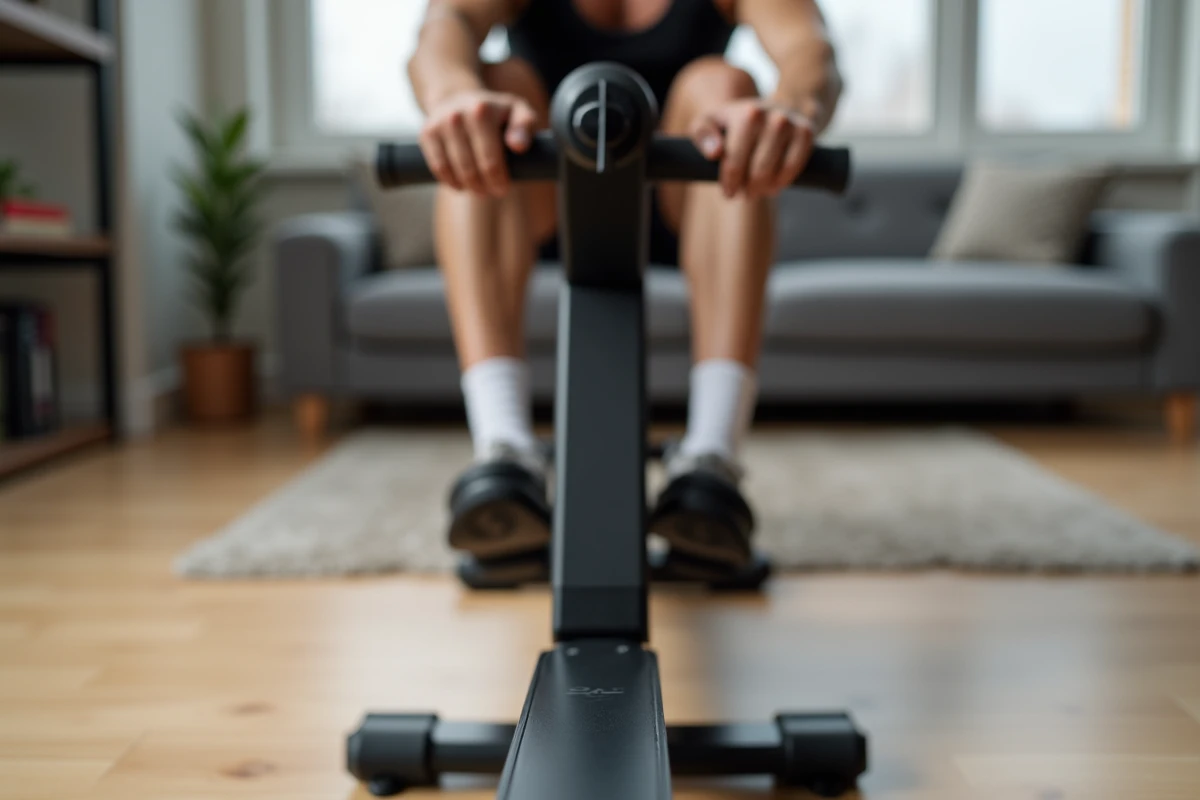
The console, often a basic LCD screen, displays time, distance, estimated calories, and number of strokes. Some Marcy models are compatible with third-party Bluetooth or ANT+ heart rate monitors, but connectivity remains limited compared to competitors like Moovyoo or Heubozen, which integrate more advanced app compatibility in comparable price ranges.
Monitor and training tracking
The absence of native connectivity does not mean the monitor is useless. The displayed data allows for basic tracking sufficient for fitness goals. The available data do not allow for conclusions about the accuracy of the calorie counter, a point on which most entry-level monitors, across all brands, remain approximate.
- LCD screen without backlighting on most recent Marcy models.
- No pre-recorded programs: resistance is adjusted manually.
- Battery-operated, with no need for a power outlet.
Choosing a Marcy rowing machine comes down to a question of consistency between the usage profile and the actual limits of the device. For regular home cardio sessions, with a compatible build and reasonable expectations regarding connectivity, these machines fulfill their role. Checking the maximum weight directly with the manufacturer remains the most useful reflex before finalizing a purchase, especially when retailer sheets have not been updated.