
After an hour on the road, pain settles in the temples or forehead, and you end up counting the remaining kilometers instead of enjoying the ride. Most motorcyclists have experienced this scenario at least once. The discomfort disappears a few minutes after removing the helmet, confirming that the problem comes from the interface between the shell and the skull, not from an underlying condition.
Shape of the inner shell and cranial morphology: the real starting point
It is often thought that a helmet “in the right size” is enough to ensure comfort. The reality is more nuanced: two motorcyclists with the same head circumference can have very different skull shapes. In recent years, manufacturers like Shoei, Arai, and HJC have been communicating more about the internal shapes of the inner shell (Intermediate Oval, Round Oval, Long Oval).
An elongated skull in a round inner shell generates two symmetrical pressure points on the temples. Conversely, a round skull in an oval inner shell compresses the forehead and the back of the skull. Identifying the shape of your skull before choosing a model avoids weeks of unnecessary breaking in and returns to the store.
You can better understand the pressure points of the motorcycle helmet by observing the areas of redness on the forehead and temples after a thirty-minute ride with a new helmet.

Bluetooth modules and pressure points behind the ear
Articles on helmet comfort discuss overall tightness, rarely mentioning the accessories that are slipped inside. Bluetooth intercoms (Sena, Cardo) require speakers pressed against the ears. When the helmet is not designed to accommodate them, the speaker creates a localized pressure point behind the ear.
A comparison by the British magazine Ride (September 2023) on “intercom ready” helmets showed that helmets pre-equipped with cavities for speakers significantly reduce complaints of headaches compared to setups added afterward, with equal padding. The difference comes from a few millimeters of foam removed in the right place by the manufacturer.
Check before buying
- Look for whether the inner lining has recessed areas for the speakers, often indicated by a marking or cut under the fabric
- Test the helmet in-store with the speakers in place for at least fifteen minutes, not just empty
- Prefer flat speakers (thin profile) when the helmet does not offer a dedicated cavity
On this point, feedback varies: some motorcyclists tolerate a DIY setup very well, while others develop sharp pain after twenty minutes. Tolerance greatly depends on the ear’s morphology and the thickness of the temporal foam.
Jaw clenching and bruxism while riding: an underestimated factor
This phenomenon is less talked about, but it contributes to many headaches attributed to the helmet. Traffic stress, vibrations, and noise trigger a reflex clenching of the jaw, especially in the city. This bruxism contracts the temporal and masseter muscles throughout the ride.
The resulting pain overlaps with the mechanical pressure of the helmet. You remove the helmet, the compression disappears, but the muscle tension takes longer to relax. The result: a diffuse headache that persists well after the ride is over.
Reduce muscle tension on the road
Deliberately loosening the jaw every ten minutes, by opening the mouth or slightly separating the teeth, is often enough to break the contraction cycle. If the problem is chronic, a thin mouthguard (like a dental tray) worn under the helmet can reduce the load on the temporal muscles.
Using earplugs also plays an indirect role. By lowering the perceived sound level, you reduce the auditory stress that promotes reflex clenching. Custom-molded earplugs attenuate noise without muffling useful hearing (horns, sirens).
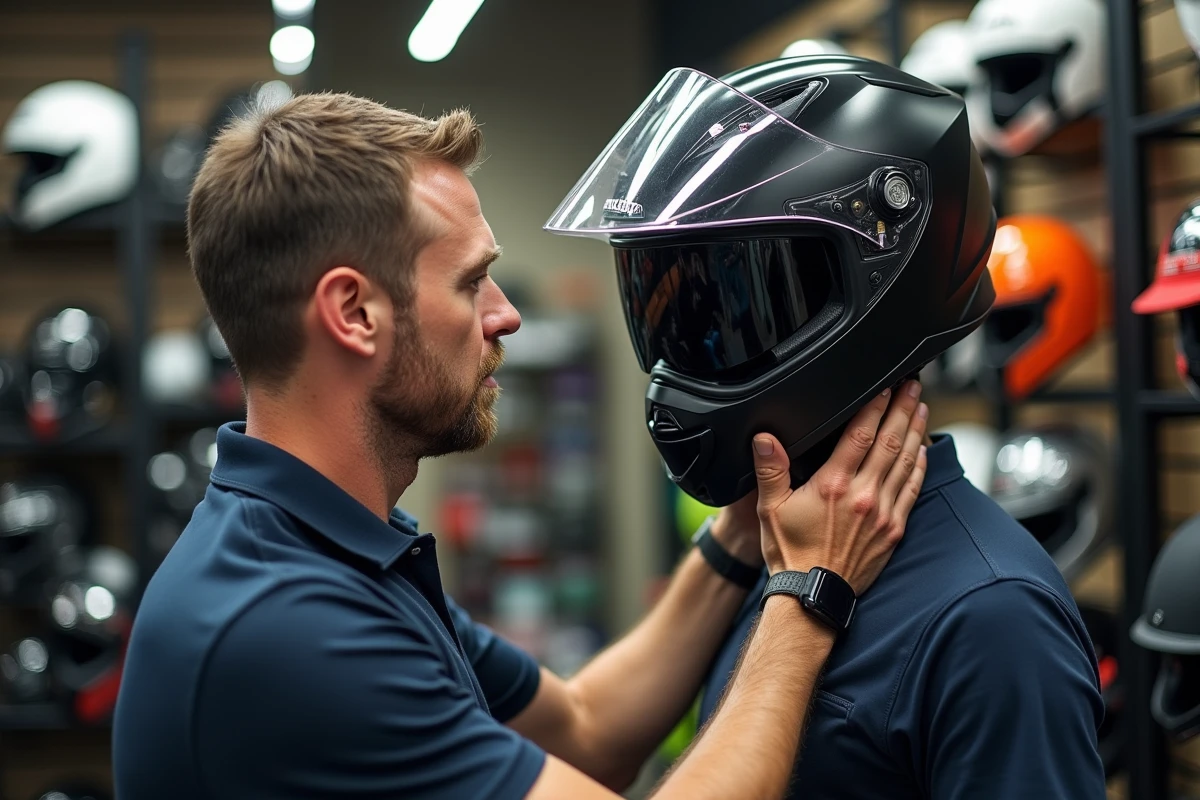
Adjusting a motorcycle helmet to eliminate pressure areas
Changing helmets is not always necessary. Several adjustments can correct localized discomfort without having to buy a complete model.
- Replace the cheek and crown foams with different thicknesses offered by the manufacturer (most brands sell kits in various sizes)
- Temporarily move or remove internal elements (nose guard, chin skirt) that modify the helmet’s contact on the forehead
- Wear the helmet daily at home for short sessions to speed up the breaking in of the foam without enduring road vibrations
- Consult a specialized dealer capable of thermoforming the inner shell on certain high-end models (Arai offers this service through its network)
A well-broken-in helmet should leave no visible red marks on the forehead or temples after a one-hour ride. If marks persist beyond the breaking-in period (usually a few weeks of regular use), the problem lies in the shape of the inner shell, not the firmness of the foam.
Cervical issues and helmet weight: when the pain comes from below
A full-face helmet weighs enough to strain the cervical muscles, especially on long trips or at high speeds where aerodynamic pressure increases the load. This cervical fatigue radiates to the skull and mimics a headache related to pressure points.
Strengthening the neck muscles with regular exercises (flexion, extension, rotation against light resistance) gradually reduces this fatigue. A lighter helmet, with equivalent protection levels, remains the most straightforward solution when the budget allows.
Posture on the motorcycle matters as much as the helmet itself. A handlebar that is too low forces you to constantly raise your head, which tightens the base of the skull. Adjusting the handlebar height and the torso angle reduces cervical load much more effectively than changing helmets.
Headaches while wearing a motorcycle helmet rarely have a single cause. The shape of the inner shell, internal accessories, bruxism, and posture combine. Addressing just one factor provides partial relief; tackling them together eliminates the problem for the majority of motorcyclists.